












































































































































Healthy Plate for Weight Loss: How to Build a Balanced Meal
Author: RVLNSV PRASAD
Last Updated: August 2026
Sources Reviewed: Harvard T.H. Chan School of Public Health, NIH/NIDDK, CDC, and WHO
Introduction
Losing weight does not have to mean following a strict or complicated diet. A healthy plate for weight loss is a simple way to build balanced meals while paying attention to food quality and portions.
Instead of eliminating entire food groups, the plate approach encourages you to include vegetables and fruits, healthy protein, whole grains or other nutritious carbohydrates, and healthy fats. It can make everyday meal planning easier without requiring you to prepare special foods.
The idea is simple: build a meal that contains a variety of nutritious foods, choose sensible portions, and develop eating habits you can maintain over time.
However, a healthy plate is not a magic formula for losing weight. Your overall food and beverage intake, physical activity, sleep, stress, health conditions, medications, and other individual factors can all influence weight management.
In this guide, you will learn how to build a balanced plate, what foods to choose, how to adapt the approach to Indian meals, common mistakes to avoid, and how to make the method practical for everyday life.
Author Note
By RVLNSV PRASAD
I created this guide to make the healthy plate approach easier to understand and apply to everyday meals. This guide is based on established nutrition guidance and aims to provide practical, general information about balanced eating and weight management.
Individual nutritional needs and weight-loss results can vary. This article is not intended to provide a single diet plan that works for everyone.
What Is a Healthy Plate?
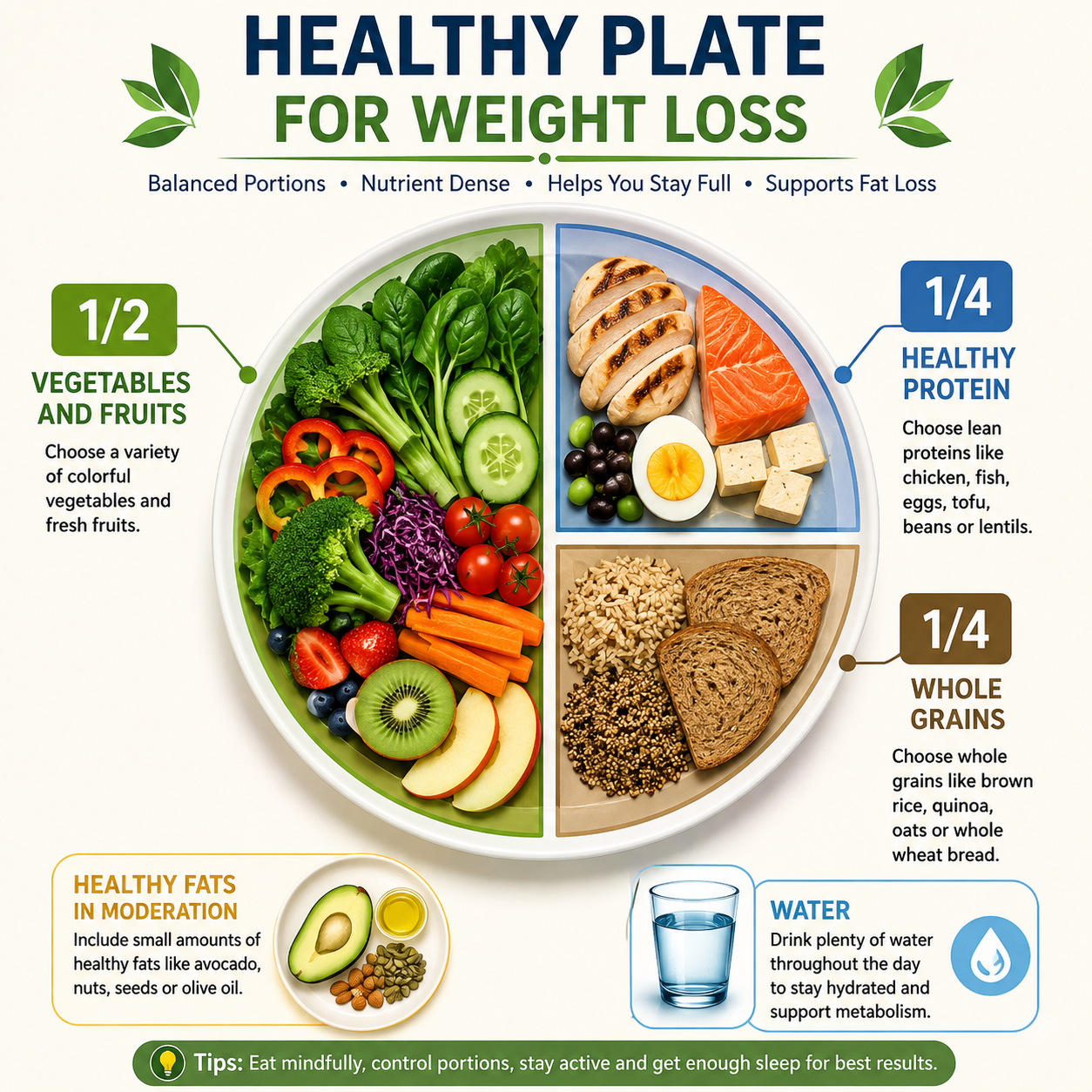
A healthy plate is a visual approach to building a balanced meal. Instead of focusing only on calories or banning particular foods, it helps you think about the types of foods that make up your meal.
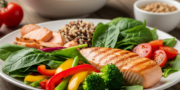
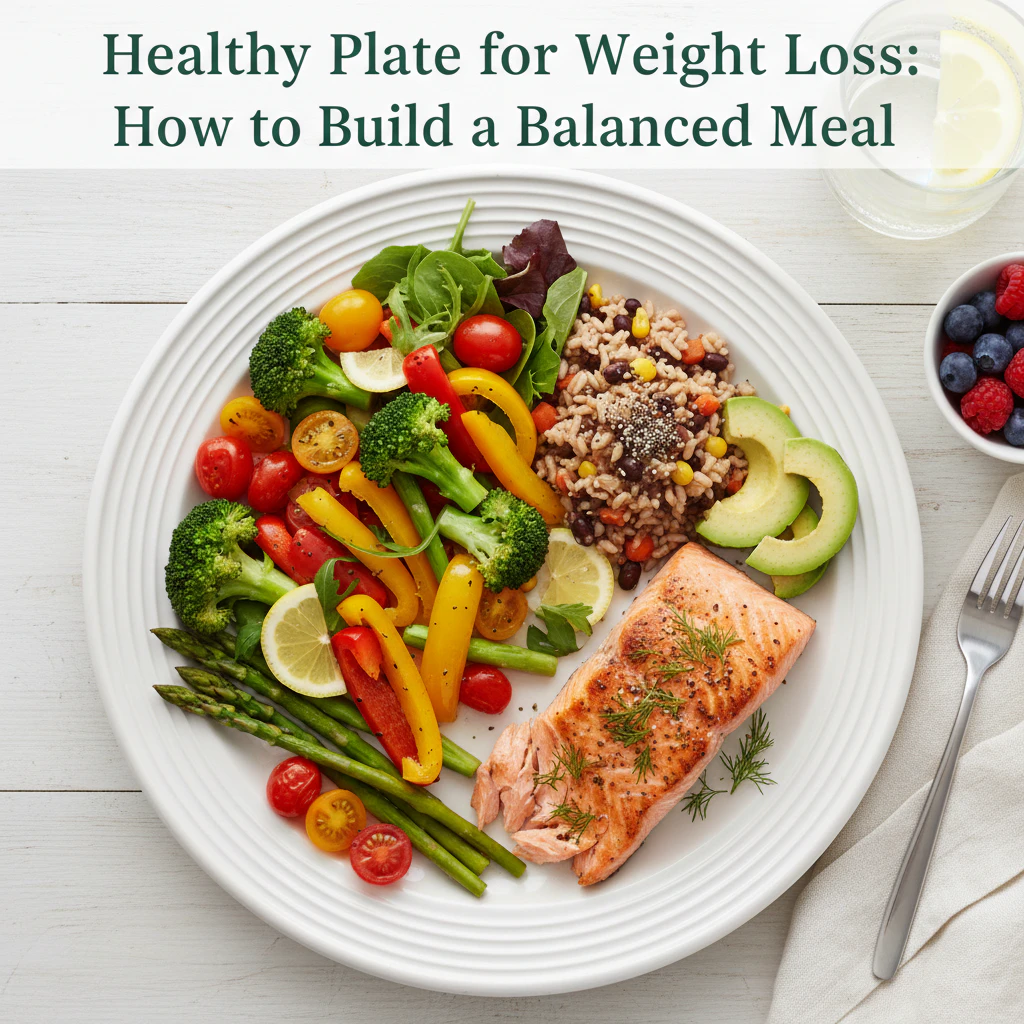
One widely known model is Harvard’s Healthy Eating Plate. It recommends making about half of the plate vegetables and fruits, one-quarter whole grains, and one-quarter healthy protein. It also emphasizes healthy plant oils and water or other appropriate unsweetened beverages.
The goal is not to make every meal mathematically perfect.
Think of the plate as a simple guide rather than a rigid rule.
A balanced meal might include:
- Vegetables and fruit
- A protein source
- Whole grains or another nutritious carbohydrate
- A small amount of healthy fat
- Water or another suitable beverage
The exact amount you need can vary according to your age, body size, activity level, health status, hunger, and personal goals.
A Simple Plate Formula
For a practical starting point, you can think about your meal this way:
½ plate: Vegetables and fruit
¼ plate: Healthy protein
¼ plate: Whole grains or other nutritious carbohydrates
Add a moderate amount of healthy fat and choose water or another appropriate beverage.
Harvard emphasizes that the quality of carbohydrates and protein sources matters, not simply the percentage of the plate they occupy.
How a Healthy Plate Can Support Weight Management
A healthy plate can make balanced eating easier.
It encourages you to include nutrient-rich foods instead of allowing one type of food to dominate the meal. Vegetables, fruits, whole grains, beans, lentils, nuts, seeds, fish, poultry, and other healthy protein sources can all fit into a balanced eating pattern.
For someone trying to manage weight, this approach can help in several practical ways.
It Makes Meal Planning Simpler
You do not have to calculate every ingredient before preparing dinner.
Instead, you can ask:
Where are my vegetables?
Where is my protein?
What carbohydrate am I choosing?
What beverage am I drinking?
These simple questions can make meal planning easier.
It Encourages More Nutrient-Dense Foods
Vegetables, fruits, whole grains, beans, lentils, nuts, seeds, fish, and other nutritious foods provide important nutrients.
Harvard’s Healthy Eating Plate emphasizes diet quality and recommends choosing vegetables, fruits, whole grains, healthy proteins, and healthy fats while limiting sugary beverages.
It Can Improve Portion Awareness
A visual plate can help you notice when a meal contains a very large amount of rice, pasta, fried food, or other calorie-dense foods and very few vegetables or protein sources.
This does not mean you have to measure every meal.
It simply gives you a practical way to create more balanced portions.
Does the Healthy Plate Method Guarantee Weight Loss?
No.
The healthy plate method is a meal-planning strategy, not a guarantee of weight loss.
Weight management is influenced by many factors, including food and beverage intake, physical activity, sleep, stress, medications, health conditions, genetics, age, and environment.
For weight loss to occur, a person’s overall energy intake generally needs to be lower than the amount of energy their body uses over time. A healthy eating pattern can help create a sustainable approach, but simply dividing a plate into sections does not guarantee a calorie deficit.
This is an important distinction.
You can eat nutritious foods and still consume more energy than your body needs if portions are very large or if calorie-dense foods, drinks, sauces, and snacks add up.
The goal is therefore not just:
“Make half the plate vegetables.”
It is:
“Build nutritious meals, pay attention to portions, and create habits you can maintain.”
The NIDDK recommends that you choose a healthy eating plan you can maintain over time and combine it with regular physical activity for weight management.
What Should Be on a Healthy Plate?
A balanced plate can contain several different food groups.
Let’s look at each part.
Vegetables and Fruits
Vegetables should play a major role in a balanced meal.
Good choices include:
- Broccoli
- Spinach
- Cabbage
- Carrots
- Tomatoes
- Cucumbers
- Bell peppers
- Cauliflower
- Green beans
- Leafy greens
Fruit can also be included.
Examples include:
- Apples
- Oranges
- Berries
- Guava
- Papaya
- Melons
- Pears
Try to choose different colors and types throughout the week.
Harvard recommends making about half of the plate vegetables and fruits and emphasizes variety.
Fresh, frozen, and appropriately prepared vegetables can all be useful choices. You do not need to eat the same vegetables every day.
Healthy Protein
Protein is an important part of a balanced meal.
Good choices include:
- Eggs
- Fish
- Chicken
- Greek yogurt
- Tofu
- Tempeh
- Lentils
- Beans
- Chickpeas
- Nuts and seeds
NIDDK includes lean meats, poultry, eggs, seafood, beans, peas, lentils, nuts, seeds, and soy products among protein choices that can fit into a healthy eating plan.
Instead of eating the same protein every day, vary your choices.
Whole Grains and Nutritious Carbohydrates
Carbohydrates are not automatically unhealthy. (WHO)
The type of carbohydrate matters.
Nutritious choices can include:
- Oats
- Brown rice
- Quinoa
- Whole-wheat bread
- Whole-wheat roti
- Barley
- Millets
- Sweet potatoes
Harvard’s Healthy Eating Plate recommends whole grains such as oats, brown rice, quinoa, barley, and whole wheat rather than making refined grains the main source of carbohydrates.
This does not mean you can never eat white rice or other refined grains.
Instead, consider the overall meal.
For example, a smaller portion of rice combined with plenty of vegetables and a protein source can create a more balanced meal than a large serving of rice eaten by itself.
Healthy Fats
Healthy fats can also be part of a balanced eating pattern. (WHO)
Examples include:
- Nuts
- Seeds
- Avocado
- Olive oil
- Other unsaturated plant oils
However, healthy fats are still energy-dense.
That means “healthy” does not mean “unlimited.”
Use reasonable portions of oils, nuts, seeds, and other calorie-dense foods.
Harvard recommends healthy plant oils in moderation as part of its Healthy Eating Plate model.
Water and Other Beverages
Water is a simple beverage choice with meals.
Harvard‘s Healthy Eating Plate recommends water, coffee, or tea and advises avoiding sugary drinks.
Sugary beverages can add calories without providing the same level of satiety as many whole foods.
If you regularly drink soda, sweetened tea, sugary coffee drinks, or other calorie-containing beverages, reducing them can be a useful step toward a healthier eating pattern.
How to Build a Healthy Plate Step by Step
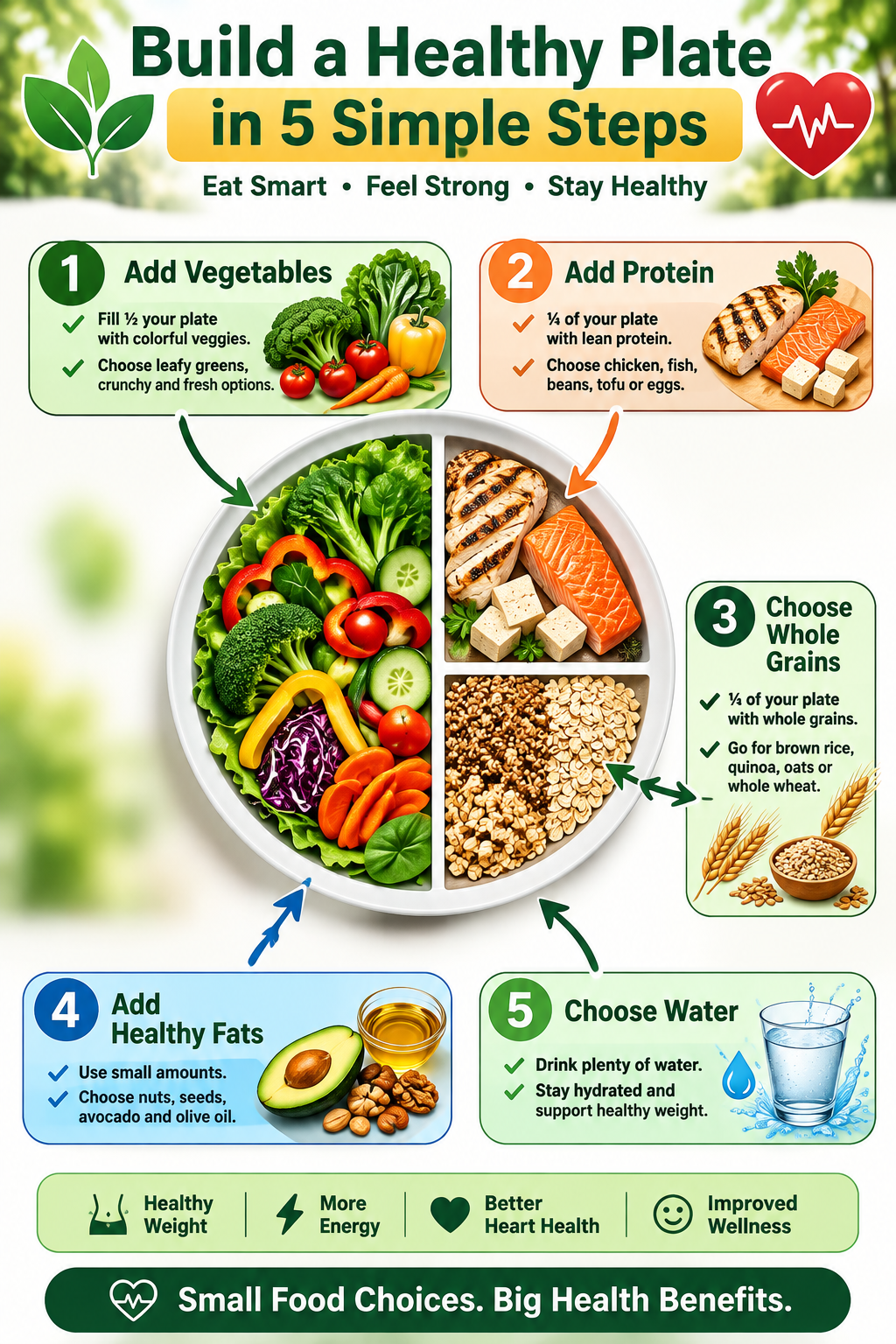
You do not need to redesign your entire diet overnight.
Start with one meal.
Step 1: Start With Vegetables
Add vegetables first.
Choose one or two varieties.
For example:
- Spinach
- Carrots
- Broccoli
- Cabbage
- Beans
Step 2: Add Protein
Choose a protein source.
Examples include:
- Eggs
- Fish
- Chicken
- Dal
- Lentils
- Beans
- Tofu
Step 3: Choose a Nutritious Carbohydrate
Add a moderate portion of:
- Brown rice
- Oats
- Whole-wheat roti
- Quinoa
- Barley
- Millets
- Sweet potato
Step 4: Add Healthy Fat
A small amount of nuts, seeds, avocado, or healthy cooking oil can complement the meal.
Step 5: Choose Your Beverage
Water is a simple default choice.
Step 6: Consider Your Individual Needs
Your portion may need to change depending on your activity level, hunger, body size, and health needs.
The plate method should guide you rather than make you feel that every meal must look exactly the same.
Healthy Plate Meal Ideas
A healthy plate does not require complicated recipes.
Breakfast
Example:
- Eggs
- Spinach and tomatoes
- Whole-grain toast
- Fruit
Lunch
Example:
- Grilled chicken
- Mixed vegetables
- Brown rice
- Water
Dinner
Example:
- Baked fish
- Steamed vegetables
- Sweet potato
- Salad
Vegetarian Meal
Example:
- Dal
- Mixed vegetables
- Whole-wheat roti
- Cucumber and tomato salad
- Plain yogurt
Simple Snack Ideas
- Fruit with plain yogurt
- A small portion of nuts
- Vegetable sticks with hummus
- Fruit with a protein-rich food
These are examples rather than mandatory meal plans.
Healthy Plate Examples for Indian Meals
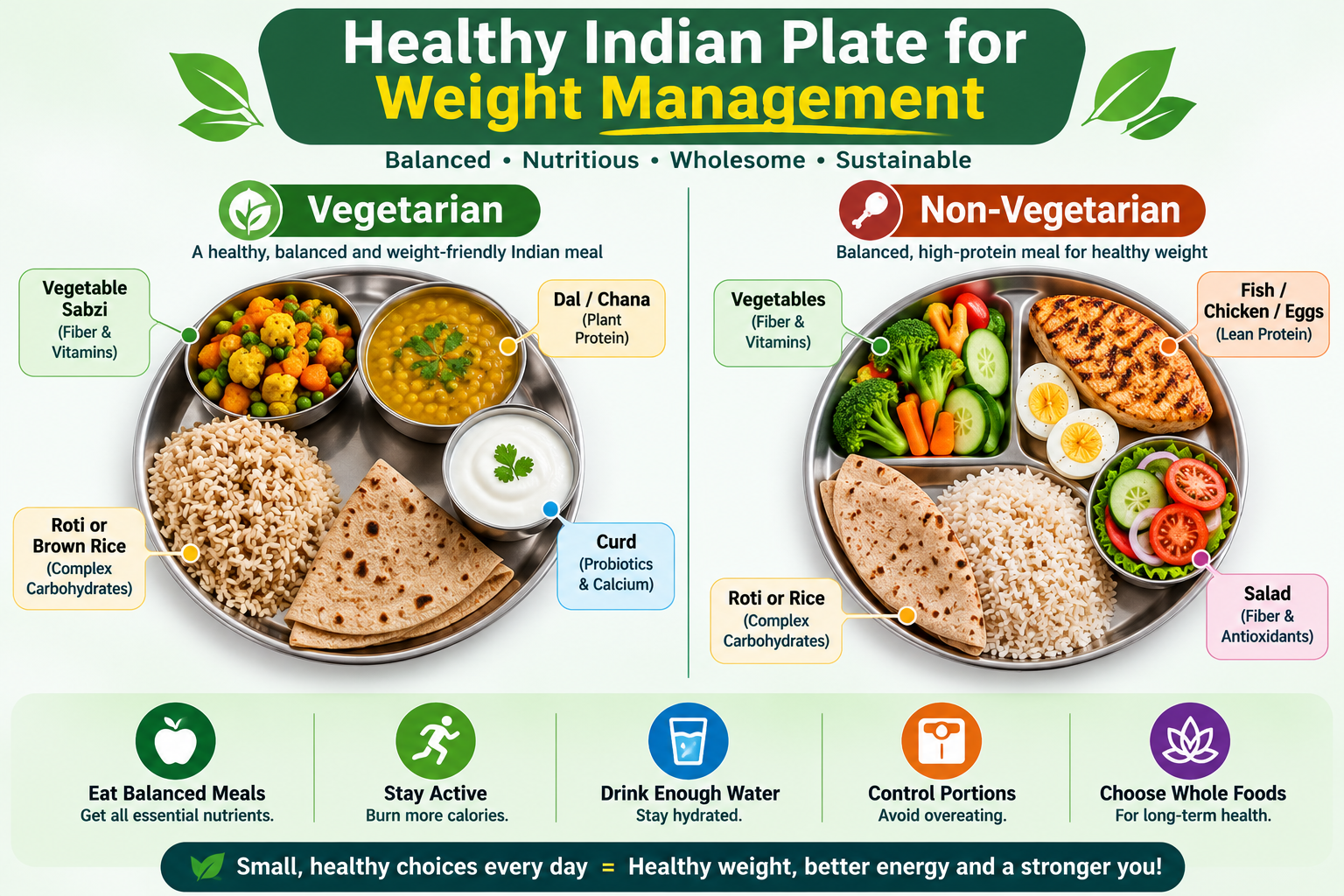
The plate method can be adapted to many cuisines.
You do not need to replace familiar foods with expensive imported products.
Vegetarian Indian Plate
A practical meal could include:
Vegetables:
- Mixed vegetable sabzi
- Cucumber
- Tomato
- Leafy greens
Protein:
- Dal
- Chana
- Rajma
- Tofu
- Paneer in a suitable portion
Carbohydrate:
- Whole-wheat roti
- Brown rice
- Millets
Side:
- Plain curd or yogurt
Non-Vegetarian Indian Plate
Another option could include:
Vegetables:
- Mixed vegetable sabzi
- Salad
Protein:
- Grilled or lightly prepared chicken
- Fish
- Eggs
Carbohydrate:
- Roti
- Brown rice
- Millet
The important point is not to eliminate traditional foods.
Instead, focus on balance, variety, preparation methods, and portions.
Common Healthy Plate Mistakes
Even a simple method can be misunderstood.
1. Filling Half the Plate With Rice
The plate method is not intended to mean that half of your plate should be rice or another refined carbohydrate.
Try adding vegetables and a protein source to create a more balanced meal.
2. Eating Very Little Protein
A meal dominated by vegetables and carbohydrates may not be as satisfying for some people.
Include a suitable protein source.
3. Forgetting Healthy Fats
Healthy fats can be part of a balanced diet.
But remember that oils, nuts, seeds, and similar foods are calorie-dense, so portions matter.
4. Drinking Sugary Beverages
A balanced plate does not compensate for a high intake of sugary drinks.
Water is often a simple alternative.
5. Treating the Plate as a Rigid Rule
Not every meal needs to look exactly the same.
Some meals may contain more vegetables.
Others may have a different combination depending on your schedule, appetite, activity, or available foods.
6. Ignoring Snacks and Extras
People sometimes focus on the main meal but forget about:
- Sugary drinks
- Desserts
- Fried snacks
- Sauces
- Large amounts of cooking oil
- Frequent grazing
These foods and beverages can contribute to total energy intake.
Healthy Plate vs. Restrictive Dieting
A balanced plate approach is different from a highly restrictive diet.
A restrictive approach may eliminate entire food groups or impose complicated rules. (Harvard)
A balanced approach focuses more on food quality, variety, portions, and habits that can fit into everyday life.
That does not mean every restrictive diet is automatically unhealthy or that every person must follow the same eating pattern.
Different approaches can work for different people.
The important question is whether the eating pattern is nutritionally adequate, realistic, and sustainable.
Harvard emphasizes that long-term healthy eating is about the overall quality of the diet rather than simply following extreme restrictions.
Sleep, Stress, and Physical Activity Also Matter
Food is only one part of weight management.
Sleep, stress, and physical activity can also influence your ability to maintain healthy habits.
The CDC identifies healthy eating, regular physical activity, adequate sleep, and stress management as components of a healthy lifestyle for weight management.
Sleep
Try to maintain a consistent sleep routine.
Poor sleep can make healthy habits harder to maintain.
Stress
Stress can affect eating behavior.
Some people may eat more when they are stressed, while others may lose their appetite.
Finding healthy ways to manage stress can support overall well-being.
Physical Activity
Regular movement is important for health and can support weight management.
NIDDK notes that healthy adults should aim for at least 150 minutes of moderate-intensity aerobic activity each week, along with muscle-strengthening activity on two or more days a week, when appropriate for their health and abilities.
You do not have to begin with an intense workout.
Walking, cycling, swimming, dancing, and other activities can all contribute to an active lifestyle.
If you have a chronic health condition or are unsure what activity is safe for you, talk with a healthcare professional before beginning a new exercise routine.
A Practical Example of Using the Healthy Plate Method
Imagine a person who works at a desk and regularly eats large portions of rice with only a small amount of vegetables.
Instead of starting a strict diet, they could make gradual changes.
For lunch, they might:
- Increase the amount of vegetables
- Add dal, beans, eggs, chicken, or fish
- Reduce the rice portion if needed
- Add fruit
- Choose water instead of a sugary drink
They could then repeat a similar approach at dinner.
The goal is not perfection.
The goal is to create meals that are more balanced and easier to maintain.
Individual results will vary.
Simple Tips to Make the Healthy Plate Method Sustainable
Plan Your Vegetables
Keep vegetables available so they are easy to add to meals.
Prepare Protein in Advance
Cook eggs, beans, lentils, chicken, or other protein foods ahead of time when convenient.
Keep Healthy Carbohydrates Available
Oats, brown rice, whole-wheat bread, whole-wheat roti, and other whole grains can make meal preparation easier.
Eat Slowly
Give yourself time to notice when you are becoming satisfied.
Pay Attention to Drinks
Liquid calories can be easy to overlook.
Avoid an All-or-Nothing Mindset
One large meal does not ruin your entire eating pattern.
NIDDK recommends getting back to healthy habits after setbacks, rather than treating them as failures.
Make Changes Gradually
You do not have to change every meal at once.
Start with one meal and build from there.
How Much Should You Eat?
There is no single portion size that works for everyone.
Your nutritional needs can vary according to:
- Age
- Body size
- Activity level
- Hunger
- Health conditions
- Medications
- Weight-management goals
The plate method is therefore best viewed as a visual guide, not a personalized calorie prescription. (Harvard)
For example, a physically active person may need different amounts of food than someone who spends most of the day sitting.
Similarly, people with diabetes, kidney disease, gastrointestinal conditions, or other medical concerns may need individualized dietary guidance.
If you need a personalized plan, consider speaking with a registered dietitian or other qualified healthcare professional.
When to Talk to a Healthcare Professional
Consider professional guidance before making major dietary changes if you:
- Have diabetes
- Have kidney disease
- Are pregnant or breastfeeding
- Have a history of an eating disorder
- Take medications that affect appetite or weight
- Have another medical condition requiring dietary management
- Are experiencing unexplained weight loss or weight gain
A healthcare professional can help you determine an eating pattern that fits your health and nutritional needs.
Frequently Asked Questions
1. What is a healthy plate for weight loss?
A healthy plate is a simple visual approach to building balanced meals. It emphasizes vegetables and fruits, nutritious protein, whole grains or other quality carbohydrates, healthy fats, and appropriate beverages.
2. Can a healthy plate help with weight loss?
It can support healthier eating and portion awareness, but it does not guarantee weight loss. Overall food intake, physical activity, sleep, stress, health conditions, and other factors also influence weight management.
3. How much of my plate should be vegetables?
A commonly used Harvard Healthy Eating Plate model suggests that about half of the plate should be vegetables and fruits, with the other half divided between whole grains and healthy protein.
4. Can I eat rice while trying to lose weight?
Yes. Rice can be part of a balanced eating pattern. Consider the portion, the type of rice, and what you eat with it. Pairing rice with vegetables and a protein source can create a more balanced meal.
5. Can vegetarians use the healthy plate method?
Yes. Vegetarian meals can include protein from lentils, beans, chickpeas, tofu, tempeh, nuts, seeds, yogurt, eggs, or other suitable foods depending on the person’s dietary pattern.
6. What protein foods can I add to a healthy plate?
Options include fish, poultry, eggs, beans, lentils, chickpeas, tofu, nuts, seeds, and other nutritious protein foods.
7. Do I need to count calories?
Not necessarily. Some people prefer calorie tracking, while others find visual portion guidance easier. However, total calorie intake still matters for weight loss, and individual needs vary.
8. How long does it take to see weight-loss results?
There is no universal timeframe. Weight-loss results vary depending on many factors. The CDC notes that people are more likely to maintain gradual, steady weight loss than rapid weight loss.
A 5-Minute Healthy Plate Check
Before eating, ask:
- Where are my vegetables?
- Where is my protein?
- What is my carbohydrate?
- How much added oil or calorie-dense food is included?
- What am I drinking?
Medical Disclaimer
This article provides information for general educational and informational purposes only. It is not intended to replace professional medical advice, diagnosis, or treatment.
Weight management and nutritional needs vary from person to person. People with medical conditions, special dietary requirements, pregnancy, a history of eating disorders, or concerns about their weight should consult a qualified healthcare professional or registered dietitian before making significant changes to their diet or exercise routine.
Do not use the information in this article to diagnose, treat, cure, or prevent a medical condition.
Conclusion
A healthy plate for weight loss can be a simple way to build more balanced meals without following a complicated or highly restrictive diet.
Instead of focusing on eliminating foods, start by improving the overall quality of your meals. Include plenty of vegetables and fruits, choose nutritious protein sources, favor whole grains and other quality carbohydrates, use healthy fats in sensible amounts, and choose water or other appropriate beverages.
The plate method is a guide, not a guarantee of weight loss. Your results can also depend on overall food intake, physical activity, sleep, stress, health conditions, medications, and other individual factors.
You do not need to make every meal perfect.
Start with one meal.
Add more vegetables.
Include a protein source.
Choose a sensible carbohydrate portion.
Then repeat those habits consistently.
Small, sustainable changes can become part of a healthier eating pattern over time.
Trusted References
- Harvard T.H. Chan School of Public Health — Healthy Eating Plate
- Harvard T.H. Chan School of Public Health — What Should I Eat?
- National Institute of Diabetes and Digestive and Kidney Diseases — Treatment for higher body weight & Obesity
- National Institute of Diabetes and Digestive and Kidney Diseases — Keep Active & Eat Healthy
- Centers for Disease Control and Prevention — Steps for Losing Weight
- World Health Organization — Healthy Diet
- World Health Organization — Carbohydrate and Fat Guidance
- Dietary Guidelines for Americans
Source Reviewed
This article was researched using nutrition and weight-management guidance from Harvard T.H. Chan School of Public Health, the National Institutes of Health (NIH/NIDDK), the Centers for Disease Control and Prevention (CDC), and the World Health Organization (WHO). Sources are linked throughout the article.
Related Posts
- 4 Week Diet Plan for Weight Loss
- 6 Tips To How To Maintain A Healthy Weight ?
- Fuel Your Body Right: 6 Best Ultimate Guide to Smart Nutrition
- Best Weight Loss Nutrition
- Healthy Eating Meal Plan for Wellness
- Category weight loss











[…] Healthy Plate For Lose Weight […]
[…] Healthy Plate For Lose Weight […]
[…] Healthy Plate For Lose Weight […]
[…] Healthy Plate For Lose Weight […]
[…] Healthy Plate For Lose Weight […]
[…] Healthy Plate For Lose Weight […]